
Shutter buying guide
Vinyl vs Wood vs Composite Exterior Shutters
Vinyl is usually the most economical choice for fixed decorative shutters. Wood offers natural character and greater sizing flexibility. Composite wood offers a painted appearance with more flexible sizing than vinyl. Selected wood and composite shutters can open and close with suitable hardware; our hollow vinyl shutters cannot. The right choice depends on function, dimensions, finish, and your total project budget.
This guide compares the vinyl, wood, and composite wood collections available from Exterior Solutions, then explains where Atlantic Premium fits. Construction and finish choices differ within these collections, so the most useful comparison is between products that meet the same needs.
Reviewed by Ken Clark, Product Specialist
20 years of experience with shutters
Updated November 13, 2026
Compare your starting options
| Option | Why consider it? | Check before you buy |
|---|---|---|
| Vinyl | Usually the least expensive starting point for fixed decorative shutters. | Perfect Shutters vinyl is not operable. Choose its paintable version if you intend to paint. |
| Wood | Consider wood for traditional character, greater sizing flexibility, or functional installation. | Select the species and finish grade. Include finishing work and future finish care in the decision. |
| Composite wood | Consider composite for a painted appearance, greater sizing flexibility, or functional installation. | Compare the exact construction and finish. Water resistance does not eliminate finish requirements. |
See the materials in actual products
These four examples use a similar louvered style with a center divider so you can compare the material choices. Open each product for available dimensions, finishes and current pricing.
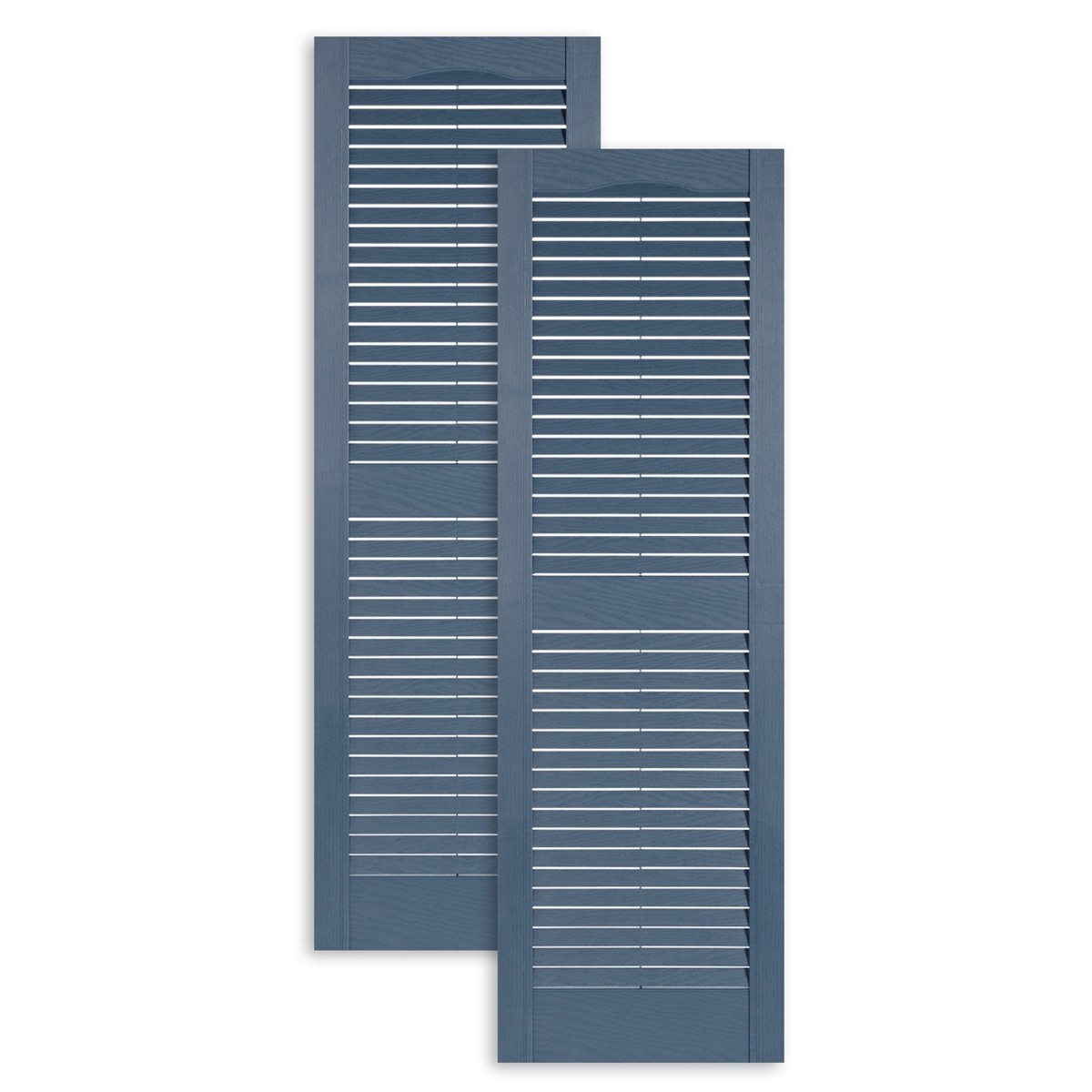
Vinyl
Standard Vinyl Louver Shutters, 15 Inches Wide
A straightforward example of fixed decorative vinyl shutters, with standard height choices and a center divider.
SKU: EL00001
View product and options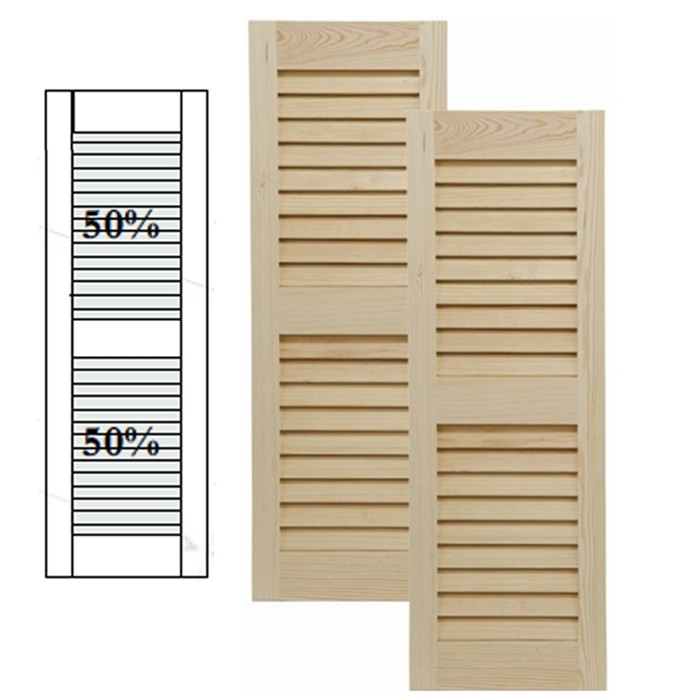
Wood
Traditional Wood Open Louver Shutters
A real wood example with open louvers and a center divider. Compare the available wood and finish options for your project.
SKU: WLC00002
View product and options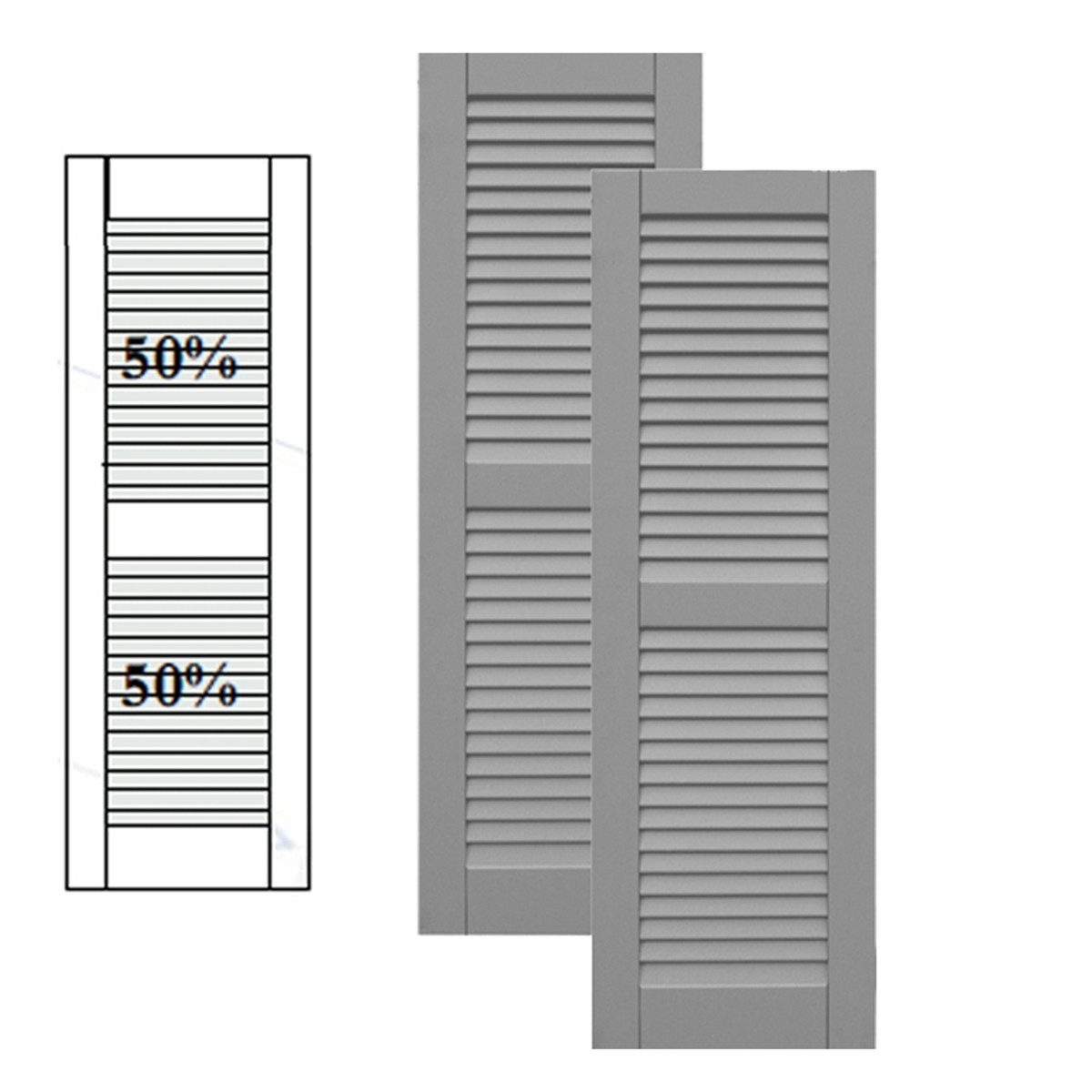
Composite wood
Traditional Composite Louver Shutters
A solid composite wood example with closed louvers and a center divider. Fixed mounting brackets are included.
SKU: CWLC02
View product and options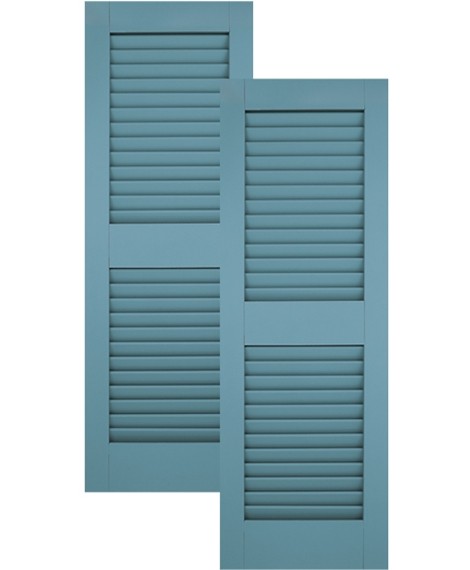
Atlantic Architectural
Manchester Style Atlantic Shutters
A premium construction example with structural PVC rails and fiberglass stiles and louvers. This is the Architectural Collection, not the Classic Collection.
SKU: AFLC02
View product and optionsProduct images show example finishes and proportions. Select your required size and finish on the product page.
Match the material to the project
For an economical decorative update, we generally start with vinyl. A manufactured home with vinyl siding is one example where it can be a practical match. For a historic home, we usually start the conversation with wood, then confirm any district requirements. These are starting points, not rules based on the type of home.
Wood and composite usually cost more than vinyl, but offer more flexibility in custom dimensions and can support functional installation with the right product and hardware. If your preferred proportions are not available in vinyl, compare those alternatives before settling for a size that looks wrong.
When should you choose vinyl shutters?
The vinyl shutters in our range are hollow with an open back. They are designed to stay fixed beside the window, not swing closed over it. Decorative hinges can add detail, but cannot turn them into operable shutters.
Vinyl sizes depend on the molded components and tooling used to make each style. Custom options exist, but not every width and proportion is possible. Wood and composite can generally be customized more freely because of how their components are made. Check the available dimensions early, especially for wide, narrow, or unusually tall windows.
Can you paint vinyl shutters? Choose the correct material version if you plan to paint. Our precolored Perfect Shutters products use polypropylene and are not intended for repainting. The paintable version uses polystyrene and is identified as color 049. Although both are sold in the vinyl shutter category, they are different formulations. Order the paintable option from the start if you want to apply your own finish. Follow the Perfect Shutters painting instructions.
Vinyl can develop a dull or faded appearance over time. Sometimes what looks like fading is a whitish surface film associated with oxidation. Cleaning that film can improve the appearance, but should not be treated as a guarantee that all color loss can be reversed.
How should you clean vinyl shutters? For routine care, Perfect Shutters recommends gentle cleaning with a garden hose and soft brush in its care and product FAQs. Use care instructions suited to the actual material and finish. Painted shutters need different consideration from precolored shutters; do not apply a cleaning treatment intended for one to the other without checking compatibility.
Are PVC and vinyl exterior shutters the same?
Do not assume that a shutter described as PVC is the same product as the hollow shutters in our vinyl category. Our precolored Perfect Shutters vinyl products use polypropylene, while the paintable version uses polystyrene. PVC means polyvinyl chloride, a different plastic. The category name alone does not tell you how a shutter is built or whether it can open and close.
Atlantic Architectural shutters illustrate why construction matters: they combine structural PVC rails with fiberglass stiles and louvers, plus composite wood panels where the style includes panels. They are not simply a solid version of our hollow vinyl shutters. Compare the actual components, intended use, finish, and hardware for the specific style. See Atlantic Architectural construction details.
When is wood the better choice?
Wood deserves a place on your shortlist if you want visible natural grain, a stained finish, or real wood construction. Choose a product and grade suitable for your intended finish. A product intended for painting should not be assumed to deliver the same stained appearance as one selected for that purpose.
For painted shutters, decide who will finish them. Perfect Shutters distinguishes natural, primed, and painted finishes. Its finishing instructions call for primer and finish coats on raw wood, while primed shutters still need finish paint. Primed does not mean ready to install outdoors without further finishing.
Our wood collection supports decorative installation and functional installation with suitable hardware. If the shutters need to close, settle the hardware and sizing requirements before choosing the final dimensions. For a historic property, confirm the required material and profile with the project’s approving authority before ordering.
How do composite wood shutters compare?
The Perfect Shutters material and finish overview describes its composite range as using Extira, with greater water resistance than wood. Consider this range when you want the appearance of painted wood and are comparing alternatives to natural wood construction.
Look closely at the finish choice. The manufacturer offers natural, primed, and painted composite products, and publishes painting instructions for unfinished and primed versions. Composite is not a reason to skip finishing. Compare finished shutters with finished shutters when evaluating price.
Look closely at the louvers before choosing. Our Perfect Shutters composite louver products have closed louvers: they create the louvered appearance without the open spaces found in the wood open louver style. That distinction matters if you are trying to match existing shutters.
There can also be a visible texture difference. In our experience, routed areas of composite shutters, such as louvers or a raised panel bevel, can feel or look rougher than the flat faces. Review close photographs or an available sample if a uniformly smooth finish is important to you.
What you are comparing with Atlantic Premium
Atlantic Premium is a collection, not a single material. Its Architectural Collection uses fiberglass in the stiles and louvers, structural PVC rails, and composite wood panels where the design includes panels. Calling the entire shutter simply PVC or fiberglass misses those construction details.
The Classic Collection uses exterior composite wood for its components, including its closed louvers. Compare the specific series and style rather than treating every Atlantic shutter as the same construction.
The factory finish is an important part of the Atlantic comparison. Atlantic describes the Classic construction and finish as composite wood with marine grade primer followed by an industrial two part urethane paint that is cured in an oven. The distinction is useful: the marine grade description applies to the primer, while the finish paint is specified as two part urethane.
In our experience, Atlantic is worth discussing for coastal projects where exposure and finish durability are important. Tell us about the location and exposure even if the house is not directly on the beachfront. We consider the shutter finish and mounting hardware together rather than assuming a durable finish makes the entire installation immune to salt exposure.
Operability does not establish storm protection. If storm performance is a requirement, verify the specific product, hardware, and installation against the relevant approval documents.
How to compare prices fairly
Build the same shopping list for each option: the same number of windows, shutter dimensions, style, finish, and intended use. Then include required hardware, shipping, and installation or painting work. Check whether the displayed price buys one shutter or a pair.
A useful comparison might be two finished shutters for one measured window, with all required mounting hardware. Comparing that total with the starting price of an unfinished shutter tells you little about the actual project cost.
Check these details before choosing
- Appearance: Compare the profile, louver openings, texture, and finish at close range as well as from the street. Request available samples before committing to a color.
- Function: Confirm fixed or operable use for the exact product. Decorative hinges do not turn a fixed shutter into a functional one.
- Care: Ask what cleaning and finish maintenance the selected product requires. Avoid treating low maintenance as no care.
- Warranty: Read the coverage for the shutter and its finish separately. Perfect Shutters publishes different material coverage by range and separate paint terms; the headline warranty length is not a promise that every aspect is covered for that period.
Still deciding? Call 866 760 2846 with your window measurements, preferred finish, and whether the shutters need to open and close. Those details give us a useful starting point for narrowing the options.
Explore vinyl, wood, composite wood, or Atlantic Premium shutters.